Of which the layers of industrial floors consist
Industrial floors usually consist of several layers.
Foundation: This is the foundation on which the industrial floor will be built. This can be construction land or an already existing concrete foundation slab.
Barrier layer: This layer is located directly on the foundation. It is a layer of thermal insulation and waterproofing made of materials such as polyethylene or PVC, which prevent moisture from entering the concrete. This is an important layer of industrial flooring.
Reinforcement layer: Reinforcement mats or reinforcement mesh are placed in this layer to strengthen the concrete structure and prevent cracking.
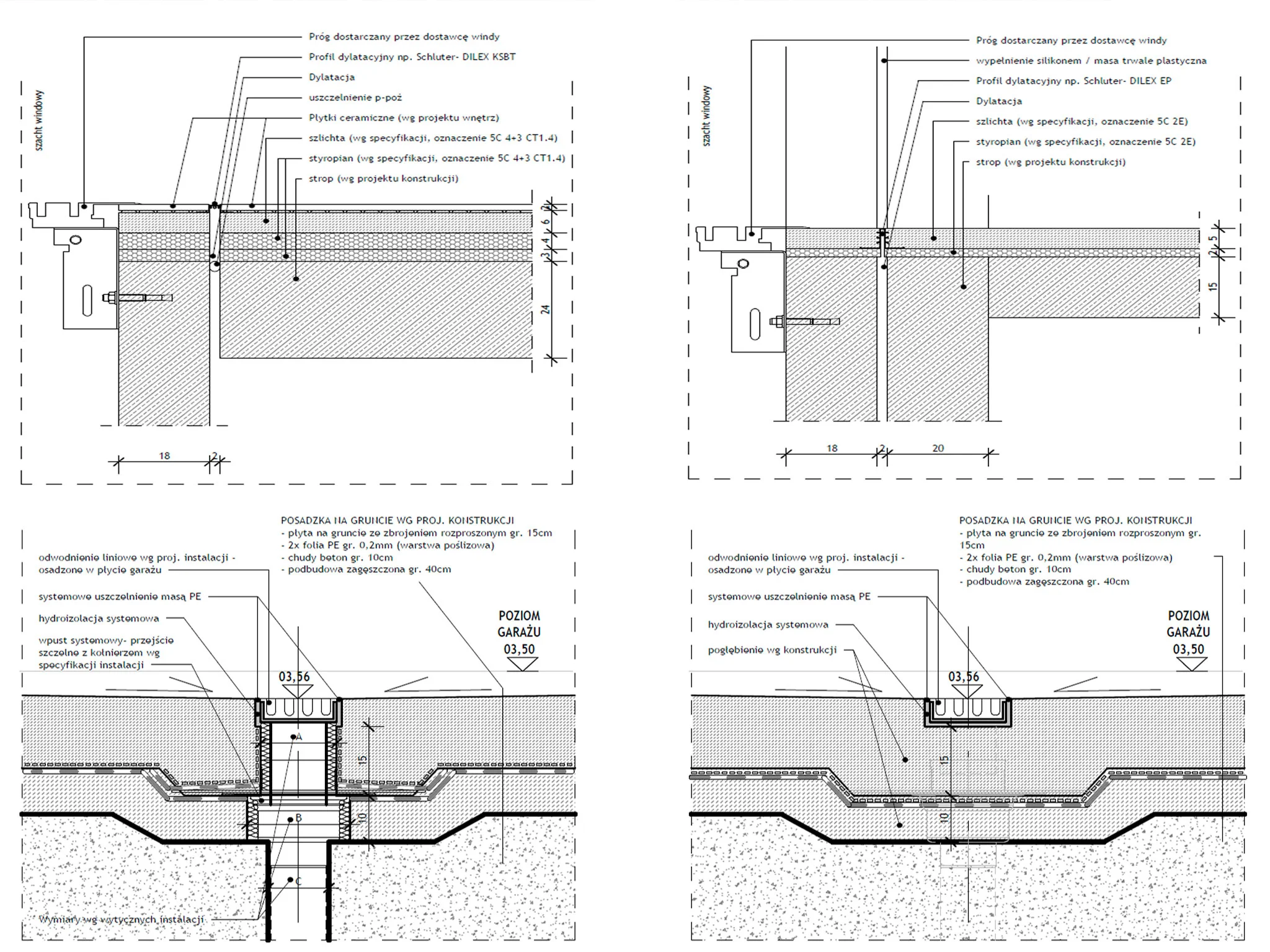
Concrete layer: This is the main layer of industrial flooring. Its thickness depends on the design and the intended load. Often concrete with special properties is used here, for example, highly compressive concrete.
Top (dill) layer of industrial flooring: This layer is made of hard concrete or epoxy resin, which protects the floor surface from mechanical, chemical and biological damage.
Protective coating: In some cases, a protective or finishing coating is applied to the floor surface, which provides additional protection and can improve aesthetics (e.g. by adding color).
Depending on the nature of the object, industrial flooring may contain additional layers-e.g. sound-absorbing, anti-slip or anti-static.
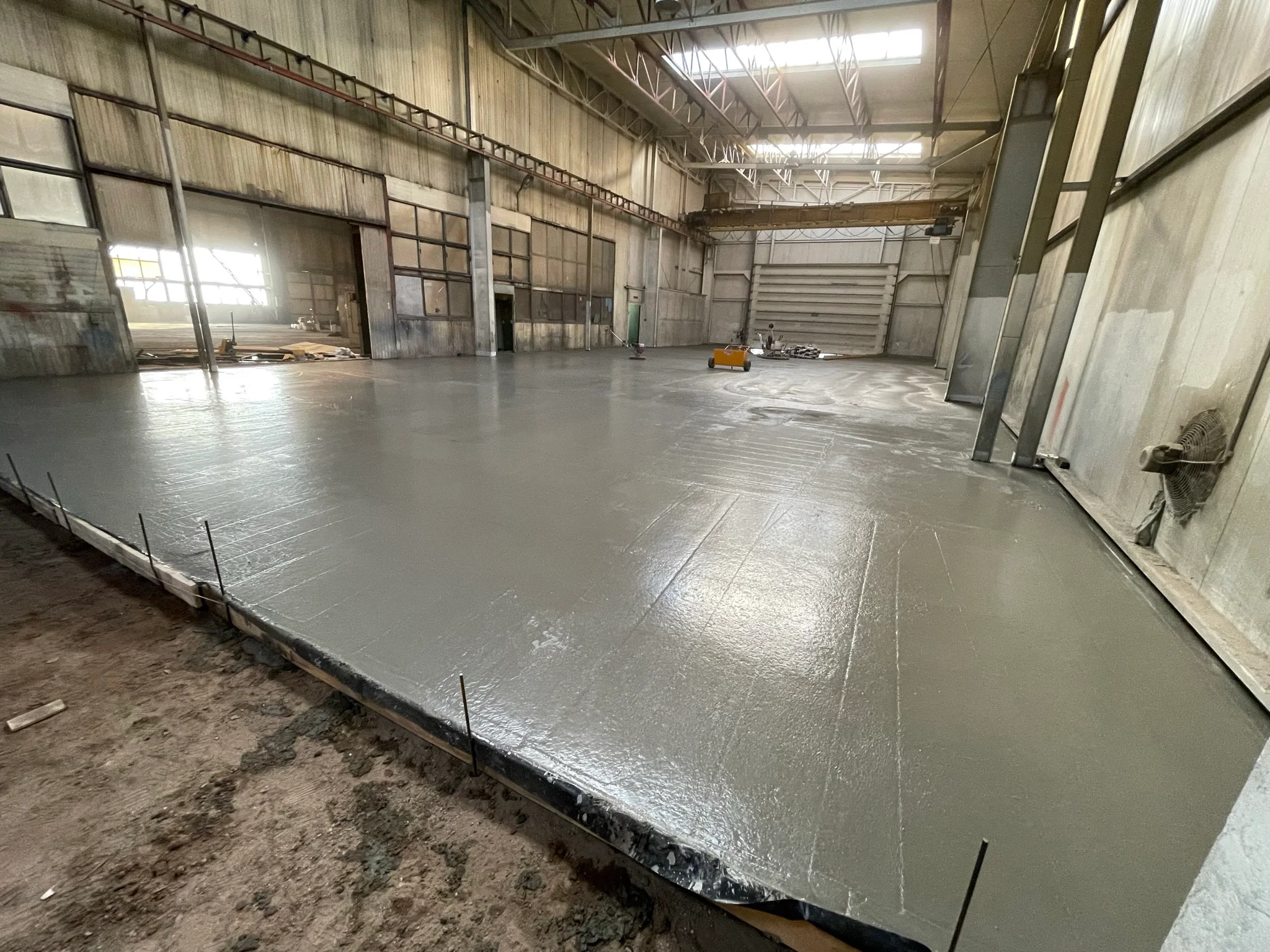
What to look for when checking industrial flooring layers
Substrate preparation: The substrate, as the main layer of industrial flooring, must be solidly prepared and leveled before the construction of the flooring begins. Leveling any unevenness of the ground at this stage will save you trouble later.
Choice of materials: Flooring materials should be selected according to the purpose of the space. Depending on the industry, there may be specialized requirements for resistance to abrasion, chemicals or industrial cleaning products, so the right selection of materials is the key to the durability of the flooring.
Concrete quality control: The quality of the concrete used for the construction of the floor should be conscientiously controlled. It is necessary to check whether the concrete floor meets the requirements set by the norms or standards for the type of floor.
Correct finishing: It is very important to properly finish the floor surface, especially in the case of Floors finished with polished concrete. This requires specialized equipment and experience.
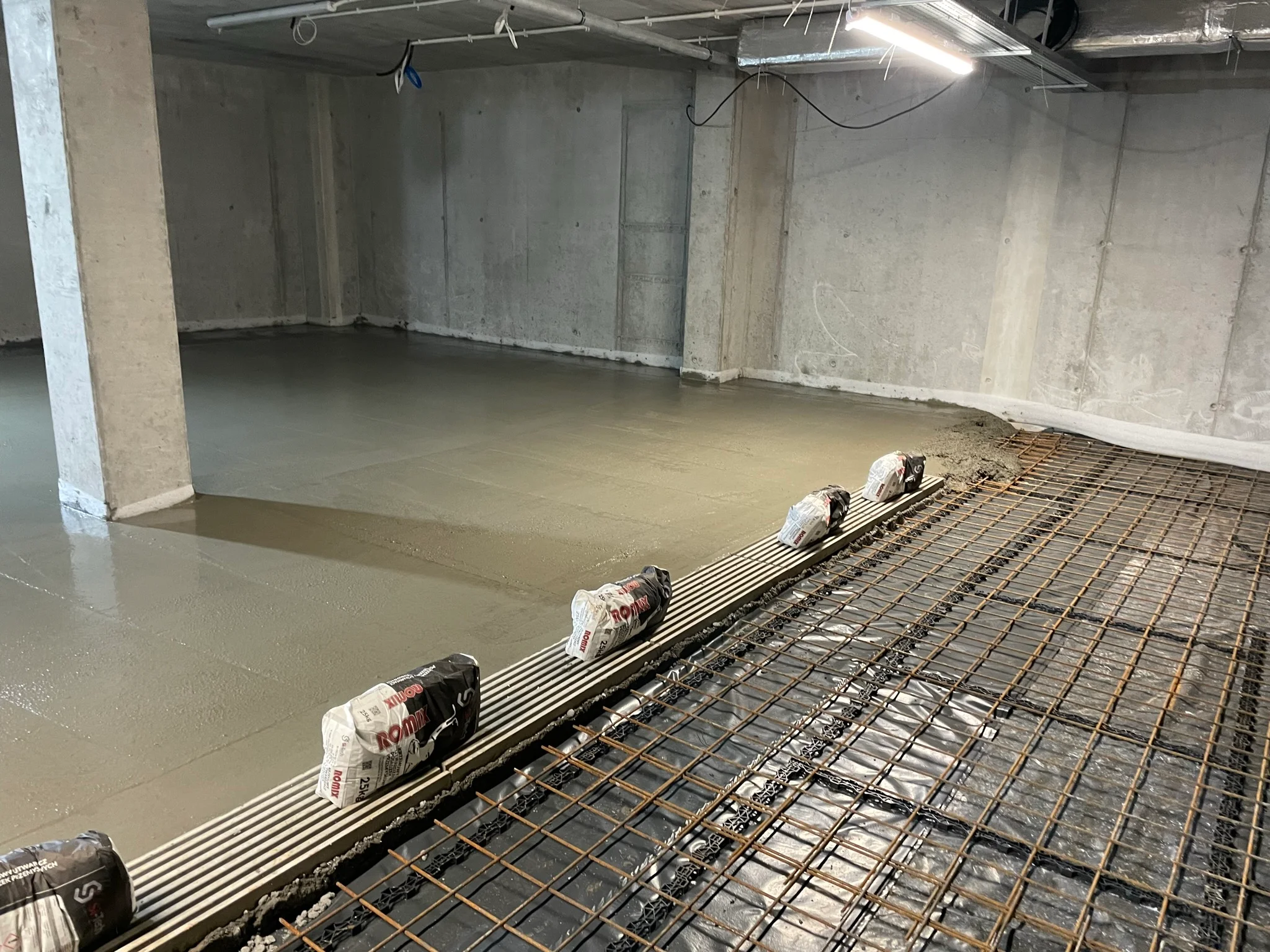
Reinforcement: This is the main layer of industrial flooring are often subjected to heavy loads, so the reinforcement should be properly designed and manufactured. Improperly made reinforcement can lead to cracks and damage to the floor.
Floor treatment: After the floor has been poured, it is necessary to treat it properly. Without adequate moisture retention, concrete can quickly dry out, which can lead to cracks.
Observance of deadlines: It must also be remembered that the concrete must mesh for a certain time before applying the next layer of industrial flooring or before the start of operation.
Proper dilatations: The floor layers should be divided into smaller sections by properly placed dilatations, which will prevent the concrete from cracking under the influence of the natural work of the floor.