Polystyrene concrete - Properties. Granulated screed and the wide range of uses of polystyrene concrete.
Anyone who's ever done a major floor renovation or built a house knows the pain. You look at the thin concrete, and there's a tangle of pipes, cables, and conduits that look like a highway at rush hour. And now you have the task: to lay even sheets of polystyrene concrete on top. Then comes the cutting, the stuffing, the irritation, and... holes where heat escapes.
What if, instead of putting these puzzles together, you chose polystyrene concrete instead of styrofoam boards? Imagine pouring in a warm mix that naturally covers every pipe.
In this article, we will take a close look at polystyrene concrete (often confused with materials like foam concrete). I’ll tell you directly: what its properties are, where the use of polystyrene concrete can save you, and how to make a polystyrene concrete screed that will last for years.
What is styroconcrete and how is this building material made?
Simply put: it's a hybrid. Polystyrene concrete is a modern composite material. Imagine taking cement (to make it hard) and mixing it with lots of beads—that's what polystyrene concrete granules are (to make it light and warm). Add water and special chemicals to keep the beads from floating.
As a result, you get a material that is not as hard as regular concrete, but it is many times lighter and has much better thermal insulation properties.
Why is this a smart solution?
Because polystyrene concrete acts as liquid insulation. You don't have to worry about uneven surfaces. You pour it, and it creates a uniform layer without thermal bridges. This is smart construction – polystyrene concrete is a material that does two things at once: levels and insulates. But epoxy resin or polyurethane flooring cannot be placed on styrofoam.
Key properties and parameters of polystyrene concrete - density and strength
The world of polystyrene concrete screeds, there is a simple rule: "you win some, you lose some." The most important parameter is the weight-to-heat ratio.
- Do you want an extremely warm floor? You need to add more granules, but the screed will be softer.
- Want a hard floor? You have to add more cement, but then it insulates less effectively.
Thermal insulating properties of this material make polystyrene concrete perfect for places where traditional concrete cannot be used due to its weight.
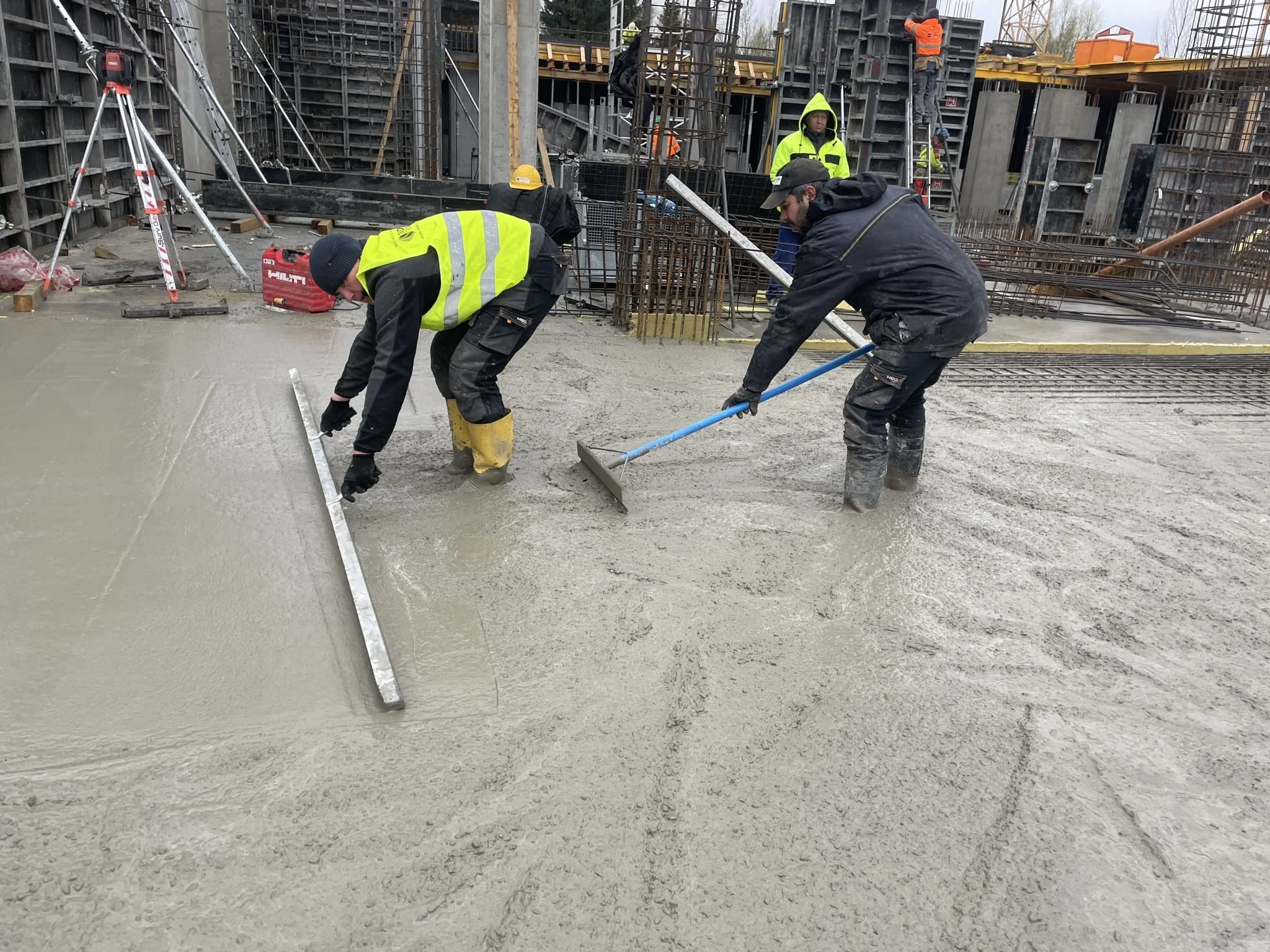
Here is a cheat sheet on density and strength that will help you choose the right mix and understand the parameters of polystyrene concrete:
| If you care about... | Look for density [kg/m³] | Thermal conductivity coefficient (λ) | Application and properties of the material |
|---|---|---|---|
| Super insulation | 200 - 350 | Very low lambda coefficient | It's practically just Styrofoam in a shell. Perfect insulation for "losing" the pipes. |
| The golden mean | 350 - 600 | Good insulating properties | The most common choice as a base for underfloor heating. |
| Strength | 800 - 1000 | Higher compressive strength | Hard, but colder. Used where load-bearing capacity is important. |
Wide use of polystyrene concrete screeds in modern construction
There are situations where slabs and regular screed are a real pain. Where is the use of polystyrene concrete screeds the best solution?
1. Floors on the ground and underfloor heating
With heat recovery and hydraulics, ground floors often resemble a maze of pipes. Polystyrene concrete penetrates everywhere. This ensures the thermal insulation is airtight, and the heating pipes have a stable base like polished concrete.
2. Ceiling filling and renovations (attic)
Got an old, wooden ceiling? You can't pour tons of traditional concrete there. Polystyrene concrete is up to ten times lighter than traditional concrete. It's ideal for attics, for leveling out curved ceilings, or as a filler for arched ceilings, without adding weight to the structure.
3. Flat roofs, terraces and wall insulation
Do you need to create a slope on the roof? Instead of cutting styrofoam, you pour polystyrene concrete. It provides good insulation and forms the slope. Sometimes it is even used in wall insulation technology (as a screed in permanent formwork), although this solution is less common.
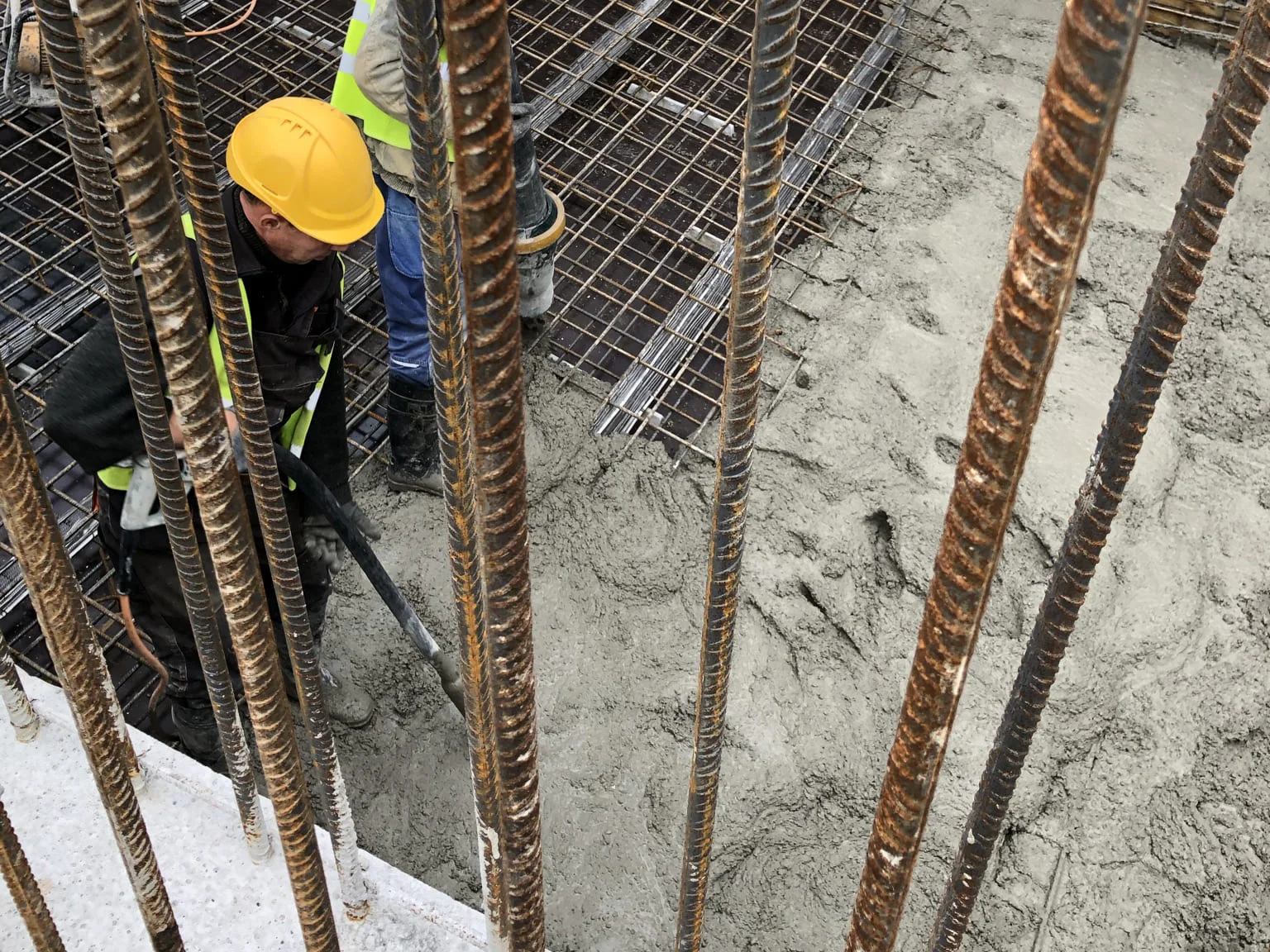
Lightness and fluid form - why does polystyrene concrete win over traditional concrete?
Is a polystyrene concrete screed worth it? It depends on how you calculate it. The main advantage is the semi-fluid nature of the mixture and its lightness.
- Low weight: The weight of styrofoam concrete is crucial for renovations;
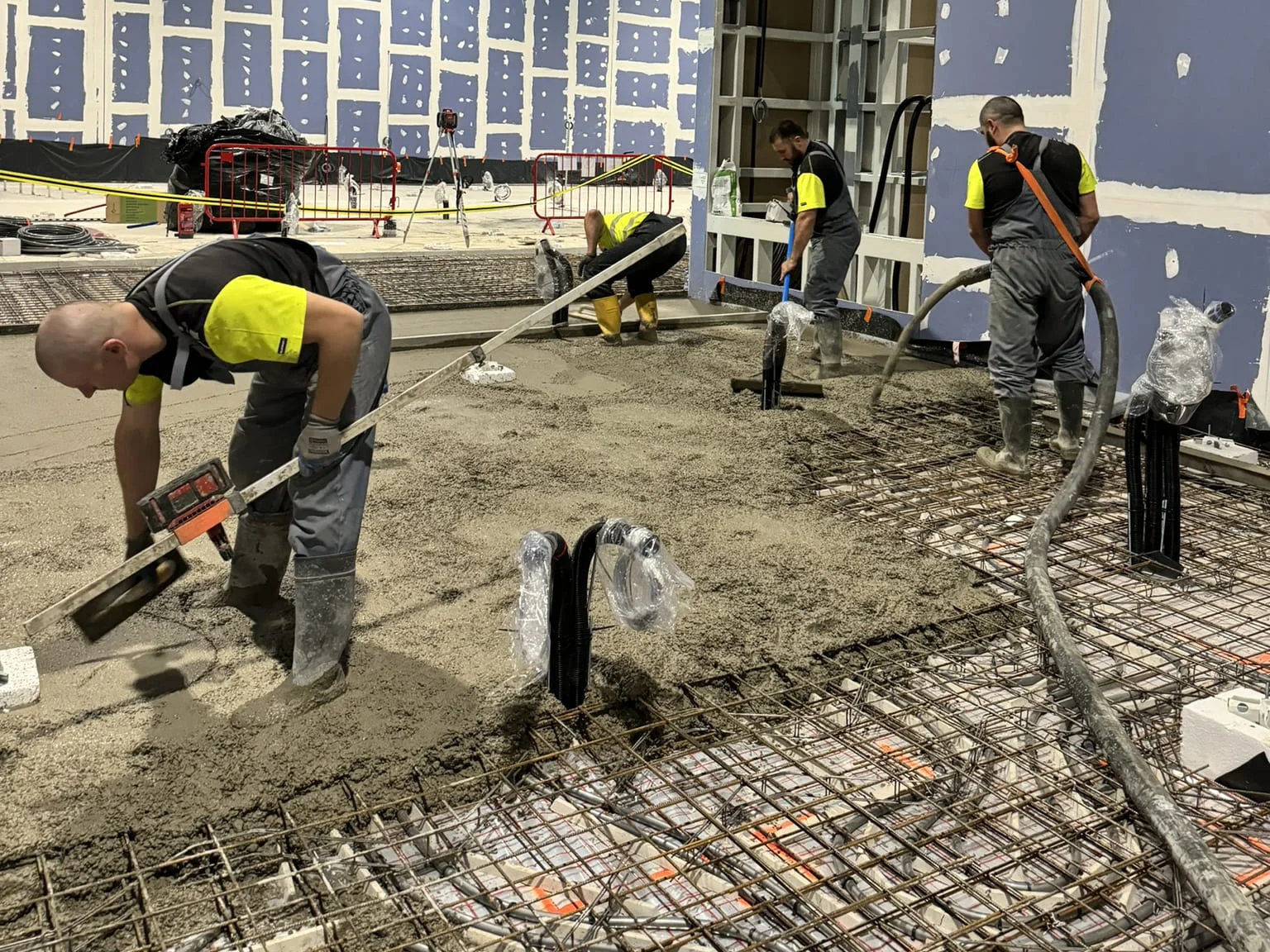
- Liquid form: The mass is pumped from the unit. Polystyrene concrete do not need to be carried in buckets;
- Insulation: It has a much better thermal coefficient than ordinary concrete;
- Acoustic comfort: The porous structure dampens sounds perfectly (acoustic insulation).
If you're pressed for time and have an uneven surface, polystyrene concrete wins. If you have a simple, empty surface like an industrial floor, traditional styrofoam may be cheaper in terms of materials, but the labor will take longer.
How to make a polystyrene screed? Floor layers and thicknesses
You don't have to be able to do it yourself, but as an investor you need to know how to supervise the work on the polystyrene concrete screed so as not to have to repair the floor.
- Preparation: The surface must be clean. Prime the old concrete to prevent it from "drinking" water;
- Mixture: For a large house, you need a mixer that will combine cement, water, chemicals, and styrofoam granules into a homogeneous mass;
- Pouring: Semi-liquid polystyrene concrete is poured to the established levels;
- Floor layers: Note! Tiles are usually not laid directly on a polystyrene concrete screed (especially a lightweight one). It is too soft. Treat it as insulation and filling. A pressure layer (screed) must be placed on top to provide compressive strength for furniture.
Typical thicknesses of polystyrene screed range from 5 cm (as a leveling agent) to even 20-30 cm (as insulation instead of polystyrene).
Polystyrene concrete - Questions and Answers (FAQ)
Here are the most common questions about the use of styrofoam concrete and its features.
| What is the price of polystyrene concrete? | The price of polystyrene concrete depends on density (amount of cement vs. granules) and region. It's typically calculated per cubic meter (m3). It's competitive when you consider the speed of work and the lack of waste. |
| Is polystyrene concrete load-bearing? | It depends on the grade. Densities above 800 kg/m³ are quite hard, like an industrial concrete floor, but lighter types (for insulation) serve as insulation rather than as a load-bearing structure. |
| Is polystyrene suitable for underfloor heating? | Yes, polystyrene concrete works perfectly as a base for underfloor heating. It creates a level, insulated base on which pipes can be easily laid (they are often clipped directly to the polystyrene concrete or placed on foil). |
| Does this material insulate a house as well as polystyrene? | It has a slightly lower lambda coefficient than pure polystyrene (because it contains cement), but it makes up for this with airtightness (no joints). To achieve the same thermal effect (thermal resistance), the polystyrene concrete layer should be slightly thicker than the polystyrene board (approximately 10-15% thicker). |